The Chinese Goddess Kuan Yin
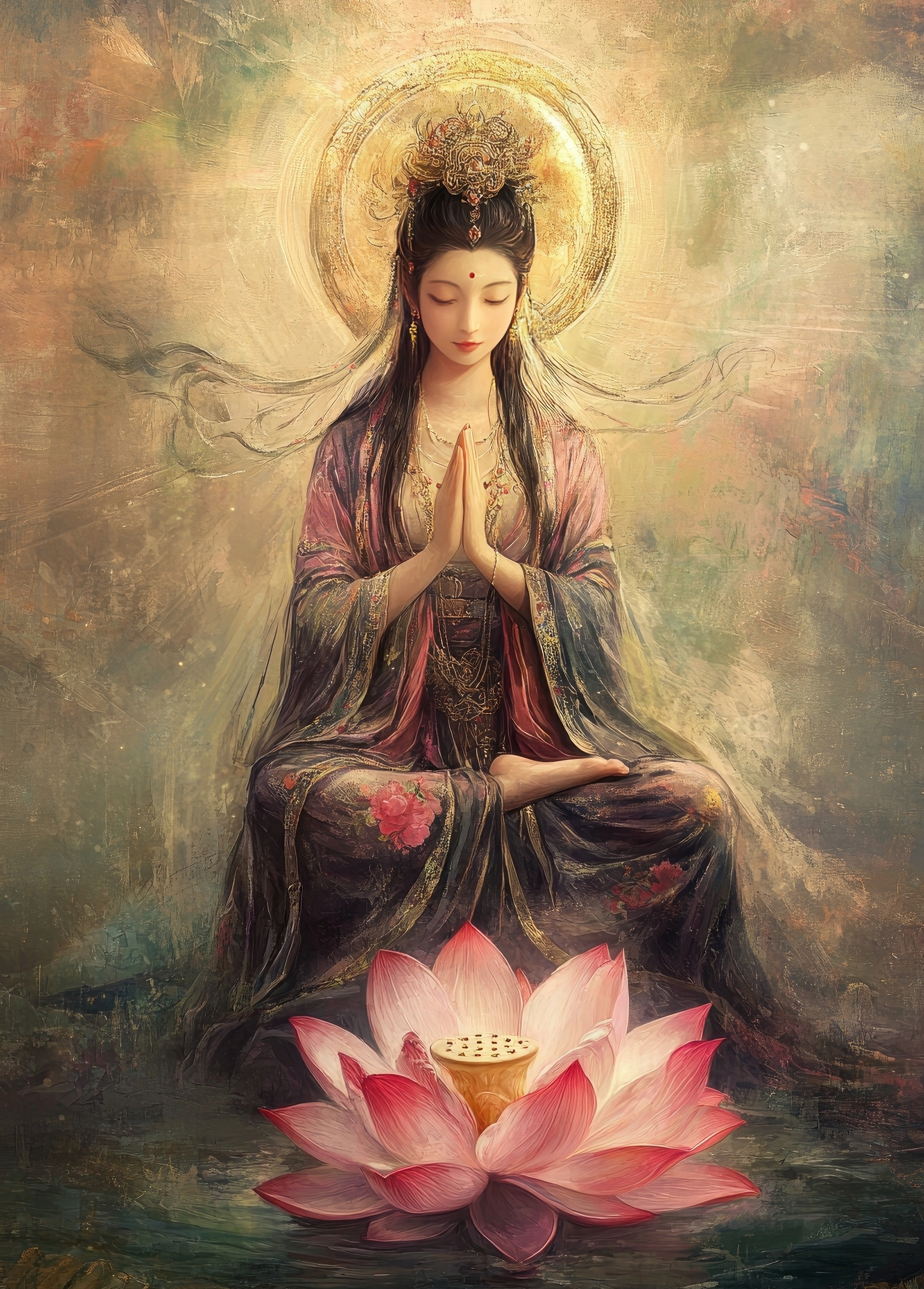
Namo Kuan Shih Yin Pu Sa
Salutations to the Most Compassionate and Merciful Bodhisattva, Kuan Yin.
She Who Hears the Cries of the World.
Among the great Goddesses and Holy Ones who have walked beside humanity, few are as universally beloved as Kuan Yin. She is the Mother of Mercy, the embodiment of compassion made visible, the gentle presence who bends toward suffering wherever it appears. No sorrow is too small for her attention. No wound is too insignificant for her healing gaze. Like the Virgin Mary in the Christian tradition, stories of her miraculous appearances have traveled across centuries and cultures, carried by sailors, pilgrims, mothers, mystics, and those who found comfort in moments of desperation.
Her name appears in many forms - Kuan Yin, Kwan Yin, Quan Yin, Guanyin - each a transliteration of the Chinese characters that describe her sacred nature. In China she is known as Guanshiyin, often translated as She Who Perceives the Sounds of the World or She Who Hears the Cries of the World. The title reveals her essence. Kuan Yin is not distant or enthroned beyond human reach. She is listening. She is present. She is the compassionate heart that responds when suffering calls.
One of the most beloved legends associated with Kuan Yin is the story of Princess Miao Shan. Refusing an arranged marriage and choosing instead a life of spiritual devotion, she incurred the wrath of her father, the king. Enraged by her disobedience, he first exiled her to a convent and later ordered her execution. Yet the gods recognized the depth of her virtue and granted her immortality.
Retreating to a sacred mountain, Miao Shan devoted herself to years of contemplation and spiritual practice. When news arrived that her father had fallen gravely ill, it was revealed that only a medicine made from the eyes and arms of a truly virtuous person could save him. Without hesitation, she sacrificed her own eyes and arms so that the healing remedy might be prepared. Through this supreme act of compassion, she transcended human limitations and became the Celestial Bodhisattva Kuan Yin. Moved by the magnitude of her mercy, her father repented, and his kingdom became known for its teachings of kindness, forgiveness, and compassion.
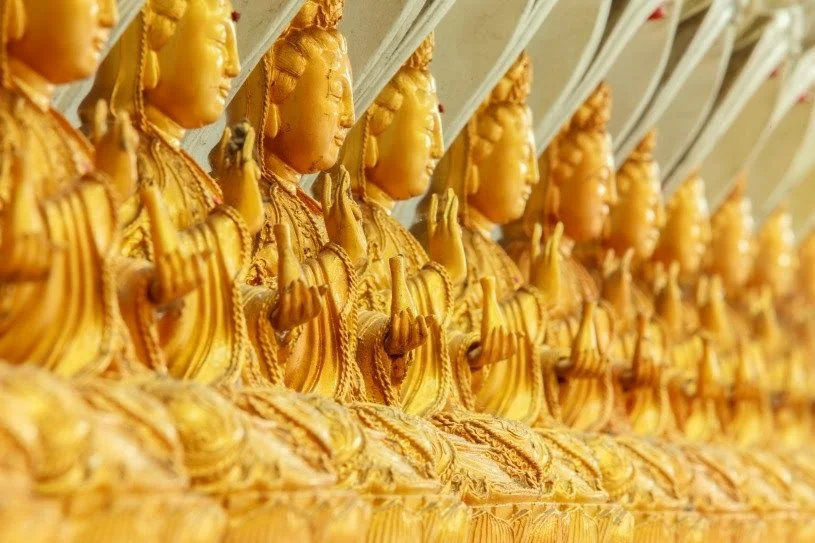
Historically, Kuan Yin emerged through a fascinating process of religious transformation. In 406 CE, the Buddhist scholar Kumarajiva translated the Lotus Sutra into Chinese, helping establish the feminine manifestation of the Bodhisattva Avalokiteshvara. While Avalokiteshvara had appeared in both male and female forms throughout Buddhist literature, it was in China that the feminine expression flourished and eventually became one of the most beloved religious figures in the world.
Kuan Yin, Merciful Mother, She Who Hears the Cries of the World, pour forth your nectar of compassion upon my heart. Teach me to embody kindness, to meet suffering with wisdom, and to become a vessel of your boundless mercy. May my hands serve, my voice comfort, and my heart remain open to all beings. Namo Kuan Shih Yin Pu Sa. ~ Kimberly Moore
As a Bodhisattva, Kuan Yin embodies a profound spiritual ideal. Rather than entering complete enlightenment, she remains present within the world, postponing her own final liberation in order to assist all beings. She stands at the threshold between suffering and freedom, listening for every cry, every prayer, every whispered plea for help. Her compassion is not passive sympathy but active mercy—an unending vow to accompany humanity through the storms of existence.
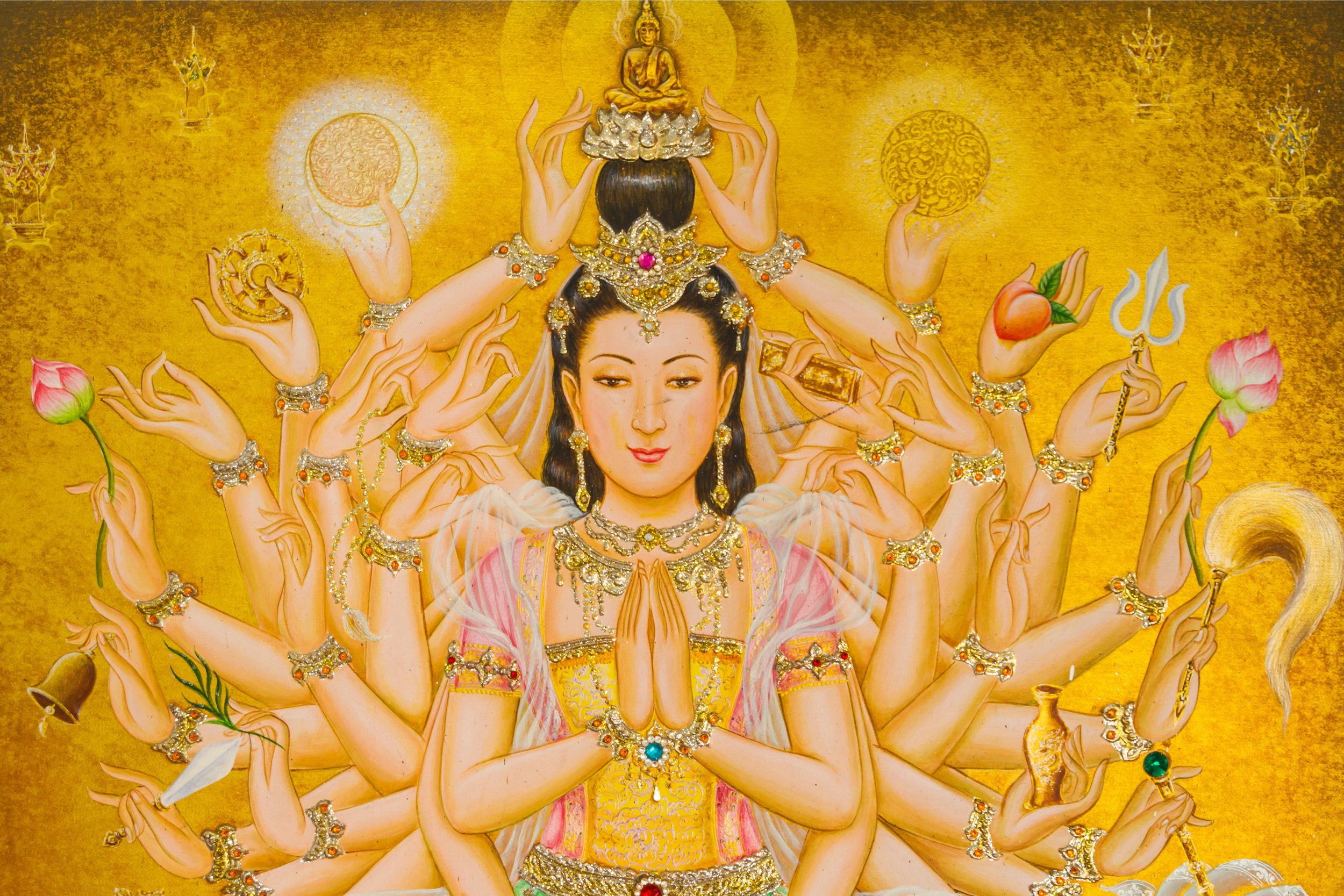
Kuan Yin's sacred symbols reveal the many dimensions of her compassionate nature. The willow branch she carries is perhaps her most recognizable emblem, representing flexibility, resilience, and the ability to bend without breaking. In Chinese tradition, willow was also associated with healing, exorcism, and communication with the spirit world.
Her vase of nectar or sacred water contains the elixir of compassion, which she pours upon the suffering to soothe grief, heal wounds, and awaken mercy within the heart.
The lotus flower, rising unstained from muddy waters, symbolizes purity, spiritual awakening, and the possibility of enlightenment amid the challenges of worldly life.
The pearl often associated with Kuan Yin represents wisdom, spiritual treasure, and the luminous jewel of enlightenment found within every soul.
Her connection to the moon reflects her gentle, reflective, and nurturing presence, illuminating darkness without force.
The peacock, considered her earthly representative, bears countless "eyes" upon its feathers, reminding devotees that Kuan Yin sees the suffering of the world and responds with boundless compassion.
In some depictions she rides a dragon, signifying mastery over the turbulent forces of life and her power to guide souls safely through emotional and spiritual storms.
Whether holding a mala, a sutra scroll, a child, or the willow and vase, every symbol associated with Kuan Yin points to the same sacred truth: compassion is not weakness, but one of the greatest transformative powers in the universe.
RESOURCES TO CONNECT FURTHER WITH KUAN YIN
Bodhisattva of Compassion by John Blofeld
Discovering Kwan Yin by Sandy Boucher
Kuan Yin Chronicles by Martin Palmer
Kuan Yin Oracle by Alana Fairchild
Wild Kuan Yin Oracle by Alana Fairchild
RED PRIESTESS FOR GODDESS MALAS & SPRAYS